


✒️|Dr.Manzoor Ah Rather
Documented by Dr. Manzoor Ahmad Rather through oral testimony of a member of the Lone lineage, Kralpora Mohalla, Fatehgarh Village, Narvaw Valley, Baramulla District
This study examines the toponymic origin of Kralpora Mohalla in Fatehgarh village, situated within the Narvaw Valley of Jammu and Kashmir’s Baramulla District. Drawing upon oral history preserved within the Lone clan, the account demonstrates how acts of everyday compassion can influence local nomenclature and collective memory, in the absence of written records or official recognition.
Fatehgarh, in earlier centuries, Fatehgarh served as an ancient principality, strategically positioned at the very heart of the Narvaw Valley. Subsistence practices were centered on terraced agriculture, the procurement of firewood from proximate forests, and dependence on the Mundri Nala, a perennial water source also referred to as the “Water Tower of Narvaw”, for drinking, domestic chores, and irrigation.
The gathering of firewood constituted a routine yet essential economic activity, traditionally undertaken by women. Departing at dawn in small groups, they utilized head pads fashioned from cloth and straw to balance and cushion the heavy bundles of wood carried on their heads.
According to oral testimony, it was during one such morning, in an undetermined year but situated in the pre-modern period, that the women of Fatehgarh had gone to the forest. In their absence, a female potter (Kral in the Kashmiri language) from a neighbouring village entered the settlement. She was known in the valley for her craftsmanship, transporting freshly made earthen pots in a large wicker basket and selling them from hamlet to hamlet.
While traversing the section of the village now recognized as Kralpora Mohalla, the potter heard the sustained cries of an infant. Investigating the source, she discovered a child, subsequently identified as a member of the Lone clan, lying unattended in the courtyard of a residence. The prevailing absence of adults is attributed to the women’s work in the forest and the men’s engagement in agricultural or pastoral duties.
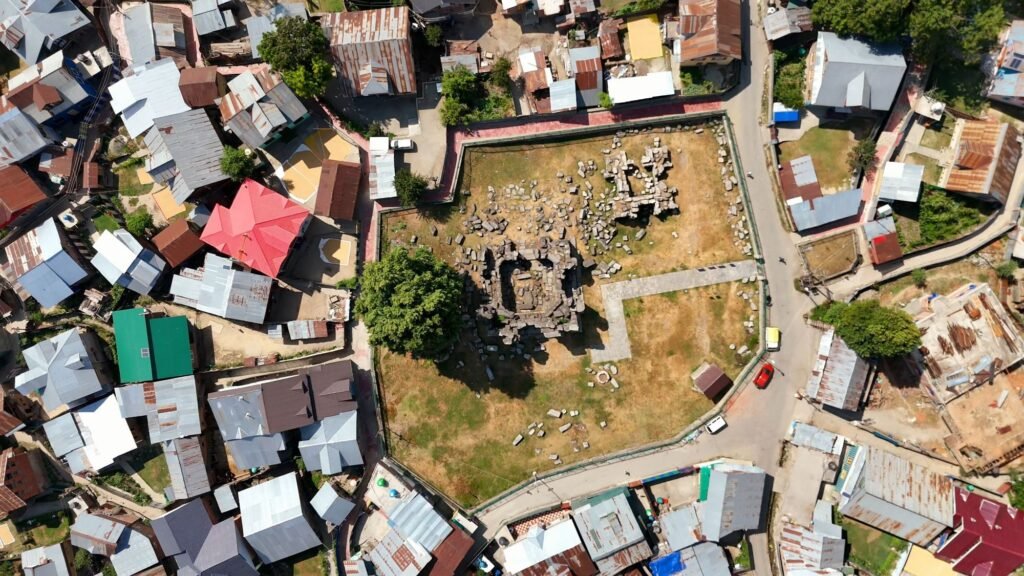
The potter, compelled by maternal instinct and humanitarian concern, took the infant into her arms and breastfed him, alleviating his hunger and distress. Upon completing this act of nurture, she resumed her journey, departing before the return of the village women.
The incident, once disseminated among the villagers, generated profound communal sentiment. From that day onward, the locus of the event came to be referred to as Kralpora, a compound derived from Kral (“potter”) and Pora (“place” or “locality” in Kashmiri). This designation emerged through oral consensus rather than official decree, and persists within the community’s lexicon despite the absence of administrative recognition.
Elders recount that the survival of the infant marked a defining moment in the history of that neighbourhood. Notably, certain descendants of the Lone family continue to bear the affectionate sobriquet “Krals,” which functions not as an occupational marker, but as a commemorative reference to the event.
The case of Kralpora Mohalla illustrates the manner in which place-names in Kashmir frequently originate from lived experience and localized oral tradition rather than from formalized cartographic or political processes. This microhistory underscores the capacity of an anonymous act of compassion, performed by an itinerant artisan, to shape enduring collective identity. It further reaffirms that intangible cultural heritage in rural Kashmir is often preserved through intergenerational narrative rather than through archival documentation.
About the Columnist
Dr. Manzoor Ahmad Rather popularly known as Narvaw Walla, is a Kashmiri academic, researcher, and cultural activist from Baramulla. He founded the Narvaw Literary Society in 2020 and actively works to preserve Kashmiri literature, oral histories, and cultural heritage. His research focuses on Kashmir, oral narratives. He Was associated With The Partition Museum Amritsar, India.
Support Independent and Impartial Journalism
Nouk-e-Qalam News is a free and independent journalistic platform. To maintain our ethical standards and avoid obscene advertisements, we have disabled Google Ads. We now rely on your generous financial support to continue our unbiased reporting. Our Writers and readers are kindly urged to contribute—daily, weekly, or monthly. Thank you for standing with truth.

b"asta binance h"anvisningskod
August 15, 2025Your point of view caught my eye and was very interesting. Thanks. I have a question for you.
binance konto skapande
August 15, 2025Your point of view caught my eye and was very interesting. Thanks. I have a question for you. https://accounts.binance.com/en-NG/register-person?ref=YY80CKRN