✒️:. Ghazi Rahil Banday
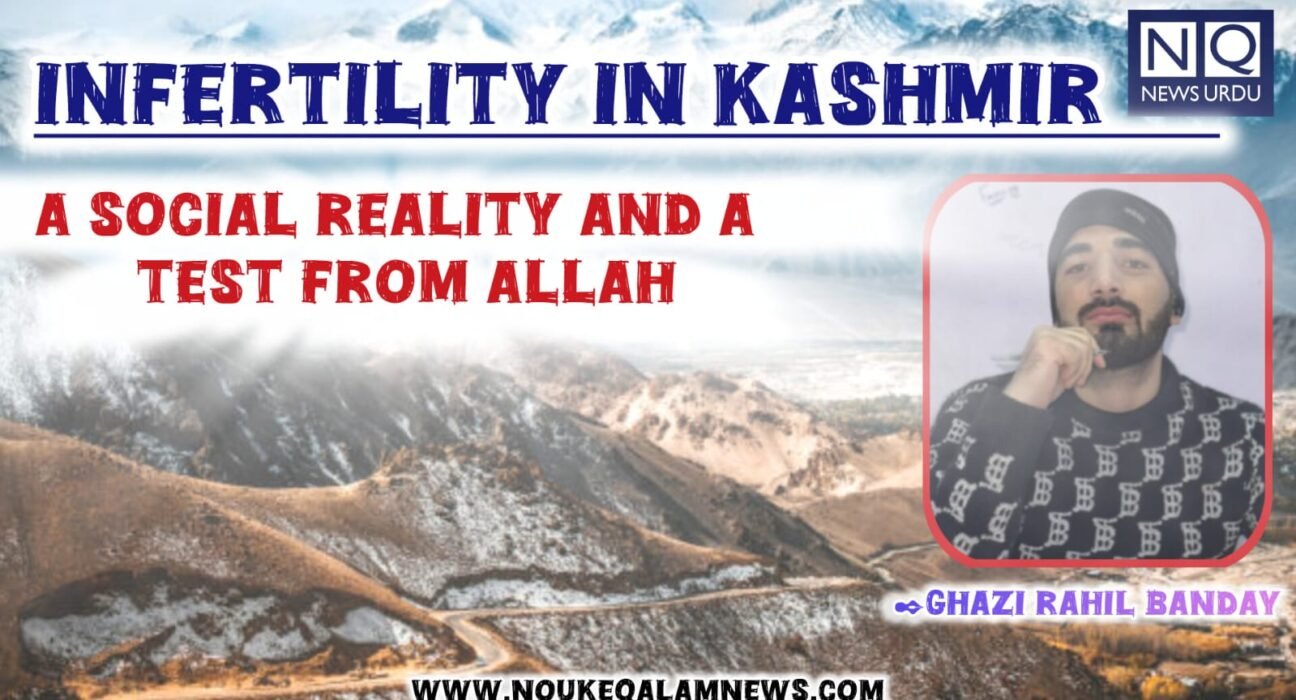
Infertility is a deeply sensitive issue in Kashmiri society—one that is rarely discussed openly but quietly affects thousands of families. In a culture where marriage and parenthood are closely tied to social identity, respect, and emotional fulfillment, the inability to conceive often becomes a source of distress, stigma, and unjust judgment. While infertility is primarily a medical condition, its impact in Kashmir extends into social, emotional, and spiritual spheres. From both a social awareness and Islamic perspective, infertility must be approached with knowledge, compassion, and faith, recognizing it as a reality of life and a test from Allah ﷻ rather than a personal failure.
Medically, infertility is defined as the inability of a couple to conceive after one year of regular, unprotected marital relations. According to regional medical observations and available studies, approximately 10–15 percent of couples in Kashmir experience infertility, meaning nearly one in every seven to ten couples struggles to conceive. This includes both primary infertility, where a couple has never achieved pregnancy, and secondary infertility, where conception becomes difficult after a previous pregnancy. These figures are significant, particularly in a society where childbearing is socially expected soon after marriage.
The causes of infertility in Kashmir are complex and multifactorial. Medical conditions such as hormonal imbalances, polycystic ovary syndrome (PCOS), endometriosis, thyroid disorders, low sperm count, erectile dysfunction, and untreated reproductive tract infections contribute to the problem. Lifestyle factors—including smoking, substance abuse, obesity, poor diet, and lack of physical activity—also play an important role. Environmental issues such as pollution, pesticide exposure, and unsafe water sources have emerged as additional risk factors affecting reproductive health.
Moreover, Kashmir’s prolonged exposure to conflict has had serious psychological consequences. Chronic stress, trauma, anxiety, and depression are known to disrupt hormonal balance and reproductive functioning in both men and women. Delayed marriages due to economic challenges, unemployment, or extended education further increase infertility risks. These realities highlight that infertility is not the result of individual negligence but a broader public health and social issue.
Despite clear medical evidence that infertility can be caused by male and female factors almost equally, social attitudes in Kashmir often place the burden entirely on women. Women facing infertility may endure emotional abuse, taunts, social exclusion, and even pressure for divorce or second marriages. Male infertility remains largely unspoken due to stigma and misconceptions about masculinity. This imbalance is not only scientifically incorrect but also socially unjust and morally harmful.
Islam offers a deeply compassionate and just framework for understanding infertility. The Qur’an reminds believers that children are a gift granted by Allah ﷻ, not an entitlement. Allah says:
“He creates what He wills. He grants to whom He wills daughters, and He grants to whom He wills sons, or He grants both sons and daughters, and He renders whom He wills barren. Indeed, He is Knowing and All-Powerful.”
(Surah Ash-Shura 42:49–50)
This verse clearly establishes that fertility and infertility are part of Allah’s divine decree (Qadr). No individual—man or woman—can be blamed for what lies beyond human control. Infertility is neither a punishment nor a sign of divine displeasure.
The lives of the Prophets reinforce this truth. Prophet Ibrahim (AS) and his wife Sarah endured years of childlessness before Allah blessed them with offspring. Prophet Zakariya (AS) made heartfelt dua for a child despite old age and apparent impossibility. These examples teach that infertility is a test that elevates believers through patience (sabr), trust in Allah (tawakkul), and sincere prayer.
Islam strictly forbids humiliating or harming others emotionally. The Prophet Muhammad ﷺ said, “A Muslim is the one from whose tongue and hand other Muslims are safe.” Mockery, insensitive comments, and public discussion of a couple’s private struggle violate Islamic ethics and human dignity. Instead, Islam calls for empathy, privacy, and support.
From a social awareness perspective, it is essential to break the silence surrounding infertility in Kashmir. Communities must promote informed discussions led by medical professionals, religious scholars, and social leaders. Couples should be encouraged to seek medical help without shame, and families must understand that infertility is a shared condition requiring mutual support. Acknowledging male infertility openly is especially important to dismantle harmful gender bias.
Mental health care is another critical yet often overlooked need. Infertility can lead to depression, anxiety, low self-esteem, and marital tension. Counseling—medical, psychological, and faith-based—can help couples cope emotionally while strengthening their bond and spiritual resilience.
Islam permits medical treatment within halal boundaries and encourages seeking cures while trusting Allah’s wisdom. At the same time, Islam reminds believers that a meaningful life is not limited to biological parenthood. Caring for orphans through kafala, mentoring children, and serving society are acts of great reward and barakah.
In conclusion, infertility in Kashmir must be recognized as both a social reality and a divine test. Addressing it requires medical awareness, social responsibility, and Islamic ethics. By replacing blame with compassion, silence with education, and stigma with faith, society can transform this quiet suffering into a shared journey of understanding and mercy. May Allah ﷻ grant patience to those tested, wisdom to families, and healing—physical and emotional—to all who struggle. Ameen.
Author’s Note
The author writes on social, legal, and ethical issues with a focus on public awareness, human dignity, and Islamic perspectives.
Support Independent and Impartial Journalism
Nouk-e-Qalam News is a free and independent journalistic platform. To maintain our ethical standards and avoid obscene advertisements, we have disabled Google Ads. We now rely on your generous financial support to continue our unbiased reporting. Our Writers and readers are kindly urged to contribute—daily, weekly, or monthly. Thank you for standing with truth.