


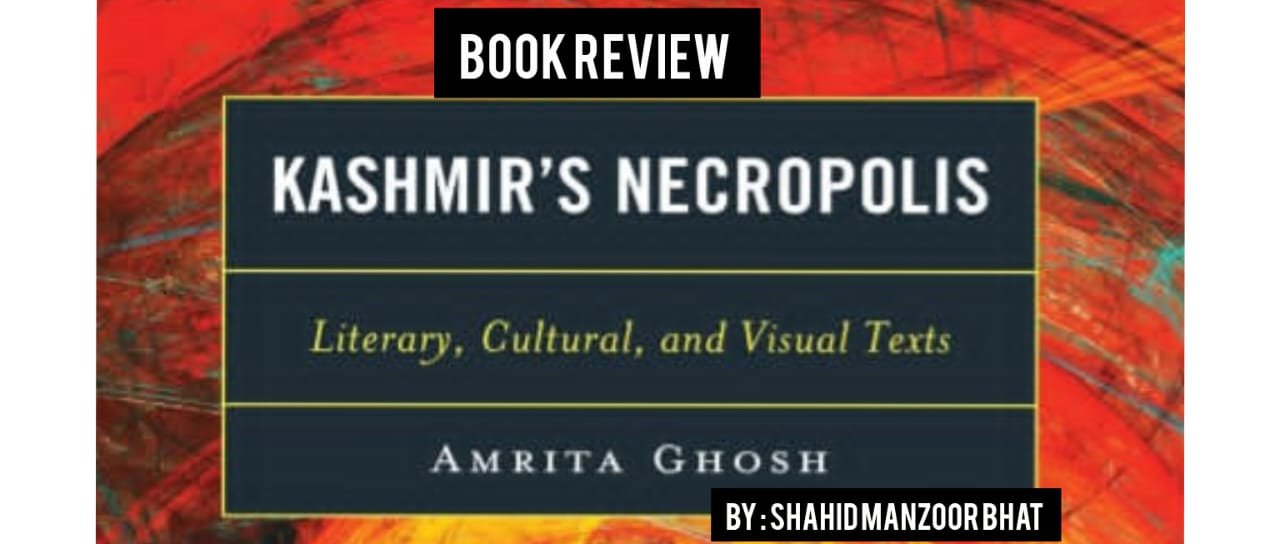
✒️:. Shahid Manzoor Bhat
Amrita Ghosh’s book Kashmir’s Necropolis: Literary, Cultural, and Visual Texts is a powerful and much-needed study of Kashmir, especially in the context of its long history of conflict. Dedicated “For the People of Kashmir,” the book stands as an important academic work that examines how literature, films, and visual art from the last twenty years challenge dominant and official narratives about the region.
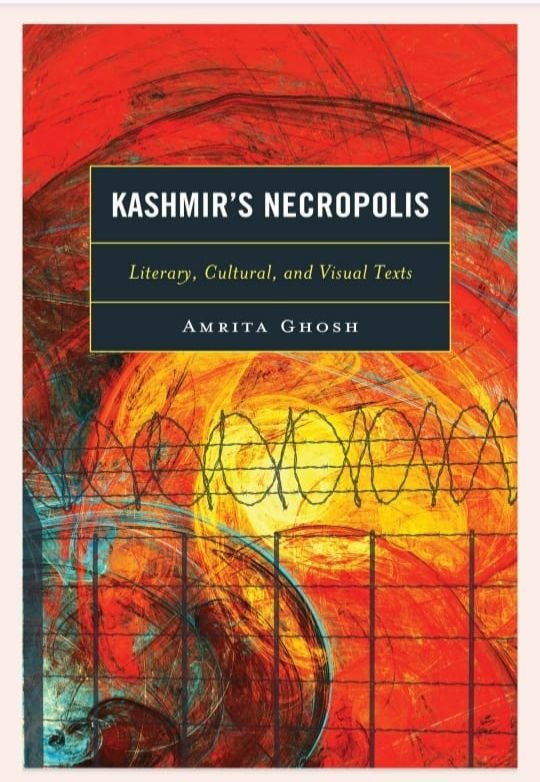
Ghosh’s main argument is striking: she describes Kashmir as a “necropolis,” a place where fear, violence, and a never-ending militarized atmosphere constantly threaten basic human life. To explain Kashmir’s political position, she introduces the term “neocolony within a postcolony,” highlighting how the region experiences multiple forms of control—not only physical violence, but also symbolic and systemic oppression. Instead of limiting the discussion to biopolitics, she uses the ideas of necropolitics and necropower to show how people in Kashmir are forced into a space where they are continuously suspended between life and death.
One of the strongest aspects of this book is the wide range of cultural material Ghosh studies, all with the intention of keeping the Kashmiri experience at the center. The chapters include rich readings of:
Literature: Mirza Waheed’s The Collaborator and Basharat Peer’s memoir Curfewed Night, which reveal how political systems create social and civic death for Kashmiris.
Film and Horror Writing: The film Haider is analysed as a rewriting of Shakespearean ghosts for a postcolonial setting. She also reads Feroz Rather’s The Night of Broken Glass through the idea of “horrorism.”
Multiple Perspectives: Ghosh includes voices from different backgrounds, including Sudha Koul’s memoir The Tiger Ladies, photography, and women’s political and artistic responses.
Kashmir’s Necropolis is an important and deeply thought-provoking contribution to postcolonial scholarship and human rights discourse. The book not only traces how violence shapes everyday life in Kashmir, but also highlights the resilience, creativity, and survival of its people. It offers a new way of seeing Kashmir—one that is honest, critical, and urgently necessary.
Support Independent and Impartial Journalism
Nouk-e-Qalam News is a free and independent journalistic platform. To maintain our ethical standards and avoid obscene advertisements, we have disabled Google Ads. We now rely on your generous financial support to continue our unbiased reporting. Our Writers and readers are kindly urged to contribute—daily, weekly, or monthly. Thank you for standing with truth.


binance Sign Up
December 7, 2025Thank you for your sharing. I am worried that I lack creative ideas. It is your article that makes me full of hope. Thank you. But, I have a question, can you help me? https://accounts.binance.com/ES_la/register-person?ref=VDVEQ78S