✒️:. Tanveer ul Islam Sirhami
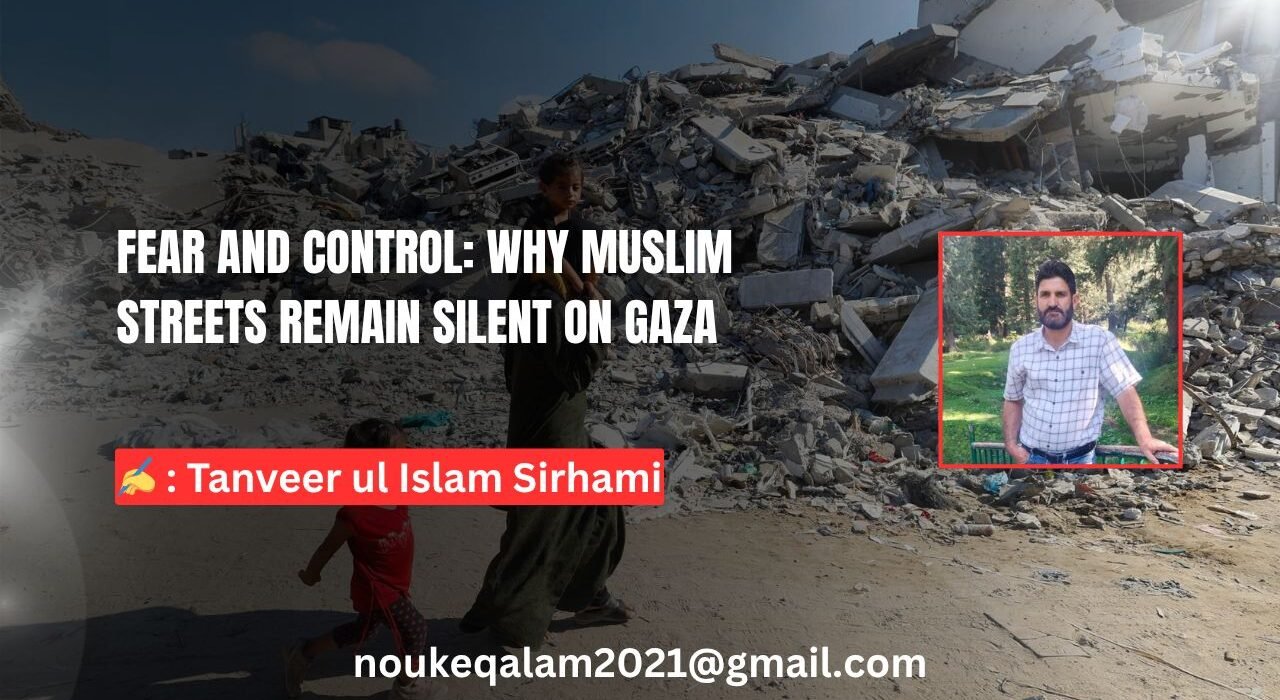
Across the world, protests demanding an end to the war in Gaza have filled the streets of Europe and America. In contrast, most Muslim countries remain quiet. Their governments have discouraged or banned public demonstrations in support of Palestine. Only a few nations such as Yemen, Bangladesh, and Iran have permitted them.
This silence is deliberate. Many Islamic countries are ruled by authoritarian or semi-democratic regimes supported by the United States and its allies. For these rulers, a rally for Gaza could quickly become a rally against their own rule. The memory of the Arab Spring still haunts them.
From Egypt and Libya to Jordan, Bahrain, Pakistan, and Morocco, citizens are frustrated. Years of repression, corruption, and inequality have widened the gap between rulers and the ruled. Any collective show of emotion can ignite wider unrest.
In private, some regimes even view Israel’s campaign as a strike against their own political opponents, including Islamist movements such as Hamas and the Muslim Brotherhood. Supporting Gaza openly could empower those they seek to suppress.
The silence of the Muslim world is not indifference. It reflects fear—fear of awakening a restless public and exposing fragile systems of power. The quiet streets of Cairo, Riyadh, and Islamabad echo with what cannot be said aloud.
About the author:
Tanveer ul Islam Sirhami writes on South Asian and Middle Eastern politics, history, and society.
Support Independent and Impartial Journalism
Nouk-e-Qalam News is a free and independent journalistic platform. To maintain our ethical standards and avoid obscene advertisements, we have disabled Google Ads. We now rely on your generous financial support to continue our unbiased reporting. Our Writers and readers are kindly urged to contribute—daily, weekly, or monthly. Thank you for standing with truth.