


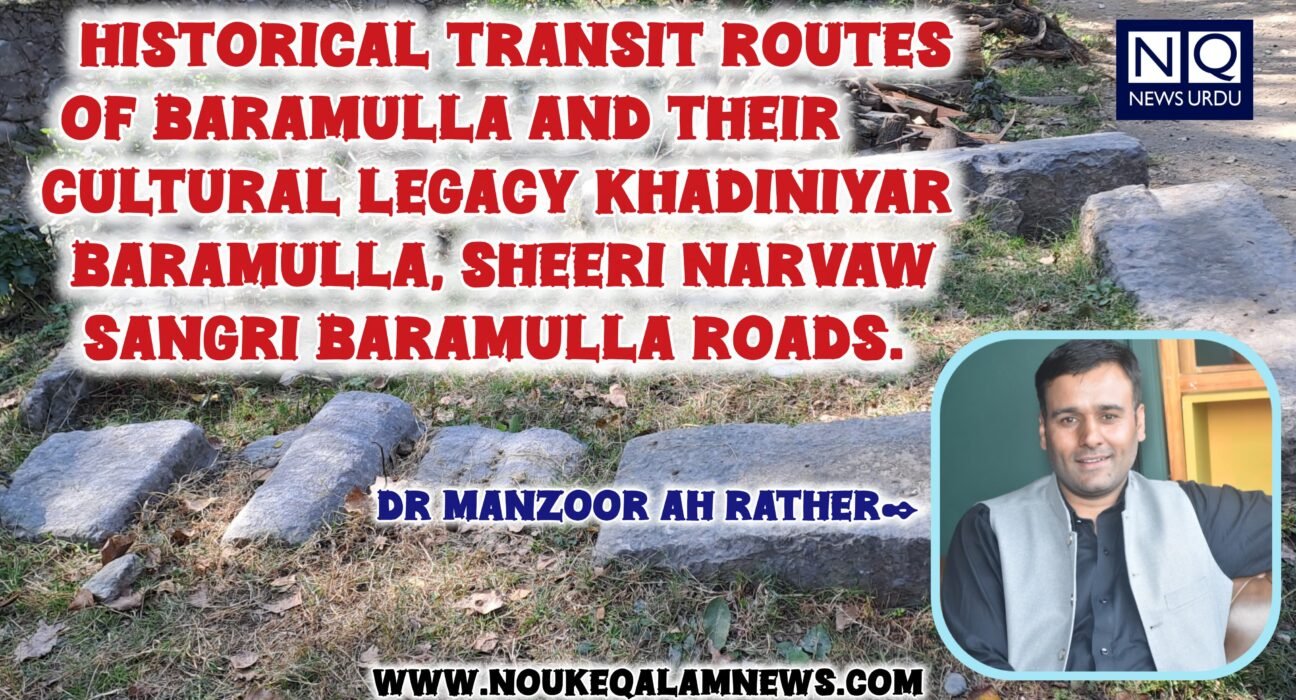
✒️:. Dr. Manzoor Ahmad Rather
This writeup examines the historical significance of Baramulla as a primary geopolitical and cultural gateway to the Kashmir Valley. By analyzing the Khadiniyar and Sangri transit routes, the engineering interventions of the 9th-century polymath Suyya, and the strategic evolution of the Dranga (fortified gates), this study situates Baramulla within the broader context of Central and South Asian exchange. It further explores how archaeological markers, specifically the “wayfarer graves” in Sheeri Narvaw and the Kushan-era foundations of Hushkpur, underscore the region’s role as a vital conduit for trans-regional mobility and intellectual synthesis.
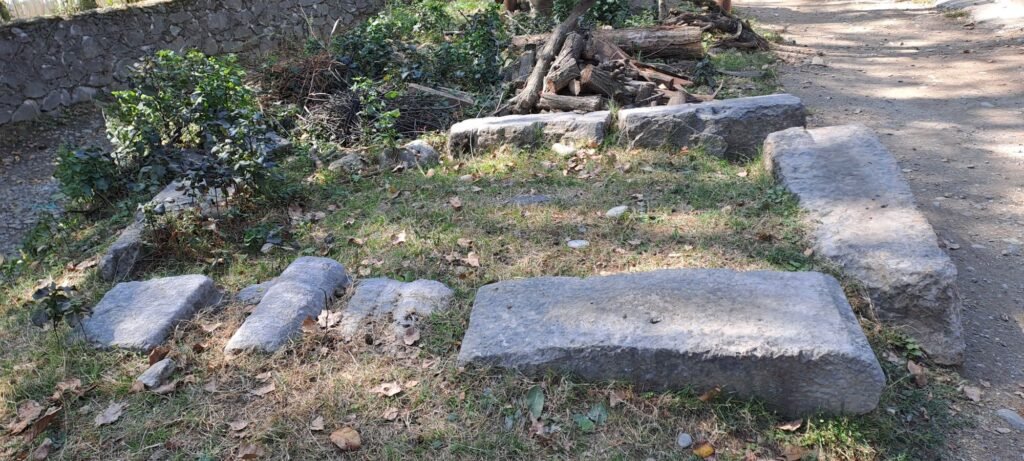
The Khadiniyar – Baramulla Road occupies a central place in the historical geography of Kashmir. It was the earliest motorable route linking Srinagar with Rawalpindi and the north-western regions of undivided India. However, its significance predates modern infrastructure by many centuries. In antiquity, this route functioned as a major trans-regional corridor connecting Kashmir with Taxila, Hazara, and the wider Gandhara region, including the Kabul Valley. Through this passage flowed trade, religious ideas, scholarship, and diplomatic exchanges, situating Kashmir within broader Asian networks of interaction.
Historical records indicate that eminent Chinese and Arab travellers, including Huen Tsang (Xuanzang), Okong, and Al-Biruni, traversed this route during their journeys. Their accounts contributed substantially to the documentation of Kashmir’s political, religious, and cultural landscape. In the later Sikh and Dogra periods, the same route facilitated the entry of European travellers and administrators, many of whom recorded detailed descriptions of Baramulla and its surroundings in their travelogues. Thus, the Khadiniyar–Baramulla Road served not merely as a physical route, but as a conduit of civilizations, knowledge systems, and cultural exchange across centuries.
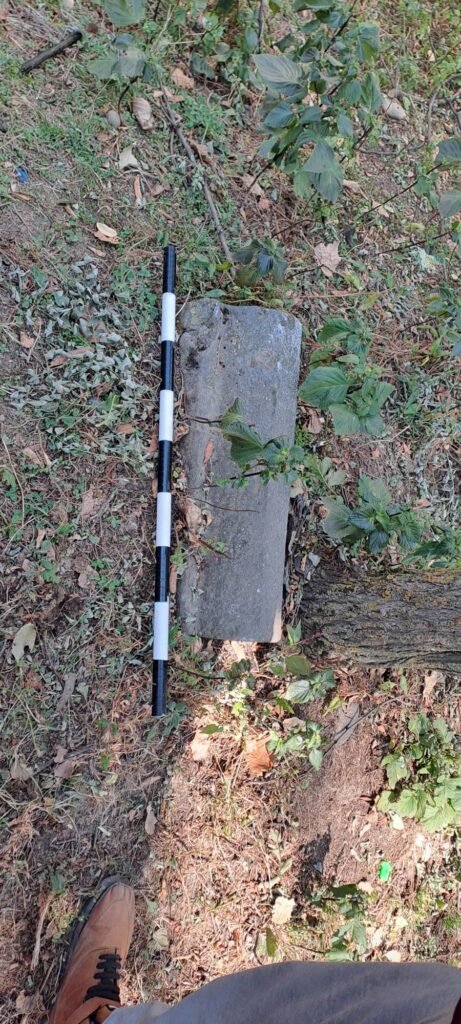
Sheeri Narvaw – Sangri – Baramulla Road
Complementing the Khadiniyar route was the Sheeri Narvaw – Sangri – Baramulla Road, which functioned as an important alternative passage. Historical tradition suggests that travellers and traders from Central Asia frequently used this route, often journeying on foot and passing through Narvaw en route to Baramulla. Over time, this road witnessed sustained human movement and commercial activity, contributing silently yet significantly to the socio-economic and cultural formation of the region. Together, these two routes underscore Baramulla’s strategic importance as a nodal point within ancient and medieval travel networks.
In the contemporary context, public demands for the reopening of these historic roads should be understood not merely as calls for improved connectivity, but as efforts to revive historically significant arteries that once integrated Kashmir into wider regional systems. Their restoration has the potential to strengthen regional cohesion while reconnecting present generations with a historically vibrant past.
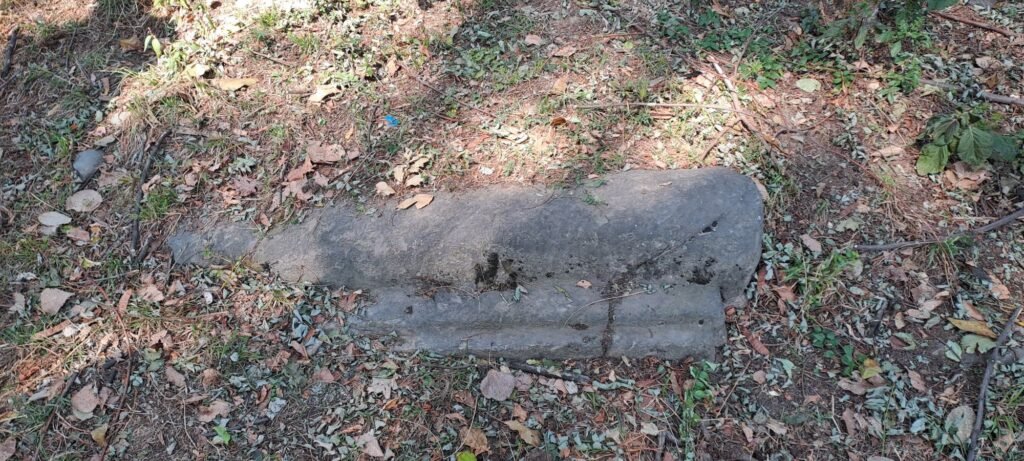
Traces of Ancient Travellers’ Graves in Sheeri Narvaw
The village of Sheeri Narvaw, located along these historic transit corridors in North Kashmir, provides tangible archaeological and cultural evidence of its role as a resting and halting point for travellers. Numerous old and scattered graves found in and around Sheeri are locally believed to belong to ancient travellers, traders, scholars, and wayfarers originating from distant regions.
These burial sites are closely associated with the Khadiniyar- Baramulla and Sheeri Narvaw – Sangri- Baramulla routes, both of which passed in proximity to Sheeri Village in Narvaw valley, making it a natural stopping point for caravans and pilgrims. Long journeys undertaken under harsh climatic conditions and across difficult terrain often resulted in fatalities. Those who died en route were respectfully interred by fellow travellers or local inhabitants, leaving behind enduring markers of trans-regional mobility and shared humanitarian practices.
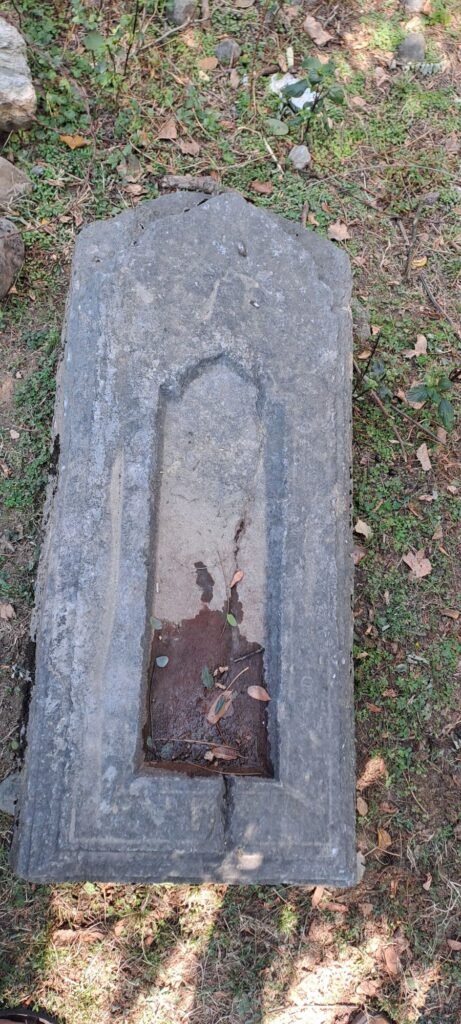
Oral traditions further suggest that many of these graves belong to non-local individuals, as indicated by their isolated placement, distinctive orientation, and the absence of identifiable descendants or inscriptions. The simplicity of many grave markers- often limited to uninscribed stones – reflects the anonymity and humility of these travellers, while simultaneously highlighting the historical depth of human movement through the region.
Taken together, these burial sites transform Sheeri’s landscape into a living archive of transcontinental travel. They reaffirm that Kashmir, far from being isolated, functioned as an active crossroads of cultures, beliefs, and intellectual traditions involving Chinese, Arab, Central Asian, and later European travellers. In light of current discussions on reopening historic routes, these graves warrant systematic documentation, preservation, and scholarly attention as integral components of Kashmir’s cultural heritage.
Baramulla is referenced in ancient historical sources, though under varying nomenclatures. Scholarly interpretations suggest that the town’s name may have evolved from either Hushkpur or Kanishkpur. These sites, located adjacent to the modern town, are believed to represent the earliest settlements in the area, founded by Kushan rulers Kanishka I and Huviska during the 1st and 2nd centuries CE. This association situates Baramulla within the broader political and cultural framework of the Kushan Empire, further reinforcing its antiquity and historical importance.
Baramulla’s historical geography is defined by its position at the narrow gorge where the Jhelum River (the ancient Vitasta) exits the valley. This natural funnel established the Khadiniyar- Baramulla Road as the earliest motorable and most significant trans-regional corridor, linking Srinagar with the Gandharan centers of Taxila and the Kabul Valley.
Diplomatic and Intellectual Exchange: The route served as the entry point for eminent travelers such as Xuanzang (Huen Tsang) in the 7th century and Al-Biruni in the 11th century. Their accounts provided the foundational documentation of Kashmir’s political and religious stratigraphy.
The Sangri Alternative: Complementing the riverine route, the Sangri – Baramulla Road through Narvaw functioned as a critical secondary passage. Utilized predominantly by Central Asian caravans, this route facilitated the movement of goods and ideas on a more decentralized, human scale, contributing to the socio-economic formation of Northern Kashmir.
A significant intersection of history and folklore is found at Dyar Galla (Kashmiri: Dyar – money; Galla – opening/throat) near Khadiniyar. This site is synonymous with the 9th-century engineering feats of Suyya during the reign of King Avantivarman.
As recorded in Kalhana’s Rajatarangini, the valley suffered from catastrophic flooding due to the obstruction of the Jhelum at the Baramulla bottleneck. Suyya’s methodology – casting coins into the silted river to incentivize the local population to dredge the passage—represents an early instance of behavioral economics applied to civil engineering. By clearing the “throat” of the river at Dyar Galla, Suyya lowered the water table of the entire valley, facilitating a massive expansion of arable land and permanent settlement.
The Dranga System: Drangbal and the Dwarpitha
The administrative control of these routes was managed through a system of Drangas (fortified watch-stations). Drangbal, located at the entrance to modern Baramulla, is identified as the ancient Dwarpitha (The Seat of the Gate).
Customs and Security: The Dwarpitha functioned as a stone-walled gate where travelers were vetted and trade duties were levied.
Cultural Stratigraphy: Today, this site reflects the region’s diverse heritage, housing the Chattipadshahi Gurudwara (commemorating the 1620 visit of Guru Hargobind Sahib Ji) and Darul Uloom Al Mustafwi. This layering demonstrates how a site of military and fiscal control evolved into a center of spiritual and intellectual discourse.
Archaeological Evidence: The Sheeri village in Narvaw Valley
The area of Sheeri Narvaw provides tangible evidence of the human cost of these trans-continental journeys. The presence of numerous scattered, uninscribed graves along the transit corridors suggests a “living archive” of wayfarers.
These burial sites are characterized by:
Isolated Placement: Distant from local village cemeteries.
Diverse Orientation: Suggesting varying religious backgrounds of the deceased.
Anonymity: Reflecting the transient nature of the populations that Baramulla hosted.
These sites warrant systematic documentation as they represent the physical manifestation of Kashmir’s historical integration into the wider Asian network.
Early Identity: The Kushan Foundation
The historical identity of Baramulla is deeply rooted in the Kushan period (1st–2nd Century CE). Scholarly consensus identifies the adjacent settlements of Hushkpur and Kanishkpur (founded by rulers Huviska and Kanishka I) as the precursors to the modern town. This association reinforces Baramulla’s antiquity not merely as a transit point, but as a formal urban center within the Kushan Empire’s cultural and political sphere.
Conclusion
The historic routes of Baramulla – Khadiniyar and Sangri – were more than mere physical paths; they were the arteries of a civilization. The restoration and scholarly preservation of these sites, from the hydraulic markers of Dyar Galla to the traveler graves of Sheeri Narvaw, are essential for reconnecting modern Kashmir with its vibrant, pluralistic past as a central hub of the Silk Road.
Sources –
- Rajatarangini Translation by M. A. Stein
- The Archaeological Remains in Kashmir by Pandit Anand Kaul
- TRAVELS IN KASHMIR AND THE PUNJAB BY BARON HUGEL
- THE ANCIENT GEOGRAPHY OF INDIA BY ALEXANDER CUNNINGHAM
- TRAVELS IN KASHMIR BY G. T. VIGNE
- Stories from Rajatarangini – Tales from Kashmir – By Devika Rangachari – Ilustrated by Ajanta Guhathakakurta
About the Columnist
Dr. Manzoor Ahmad Rather popularly known as Narvaw Walla, is a Kashmiri academic, researcher, and cultural activist from Baramulla. He founded the Narvaw Literary Society in 2020 and actively works to preserve Kashmiri literature, oral histories, and cultural heritage. His research focuses on Kashmir, oral narratives. He Was associated With The Partition Museum Amritsar, India.
Support Independent and Impartial Journalism
Nouk-e-Qalam News is a free and independent journalistic platform. To maintain our ethical standards and avoid obscene advertisements, we have disabled Google Ads. We now rely on your generous financial support to continue our unbiased reporting. Our Writers and readers are kindly urged to contribute—daily, weekly, or monthly. Thank you for standing with truth.


