✒️ :. Sana zehra
BA Ist semester (public administration)
Kashmir is known for its breathtaking mountains, beautiful valleys, rivers, and lakes. It is often called the “Paradise on Earth” because of its natural beauty. However, despite its beauty, Kashmir is highly vulnerable to natural disasters, especially floods. Floods have caused widespread destruction to lives, property, agriculture, and infrastructure, making them one of the most serious challenges faced by the region.
Floods usually occur due to heavy rainfall, melting snow, overflowing rivers, and poor drainage systems. In Kashmir, the Jhelum River and its tributaries play a vital role in the region’s water system. During continuous rainfall, the water level rises rapidly, causing rivers to overflow and flood nearby areas. Climate change, deforestation, and unplanned urban development have further increased the risk of flooding in recent years.
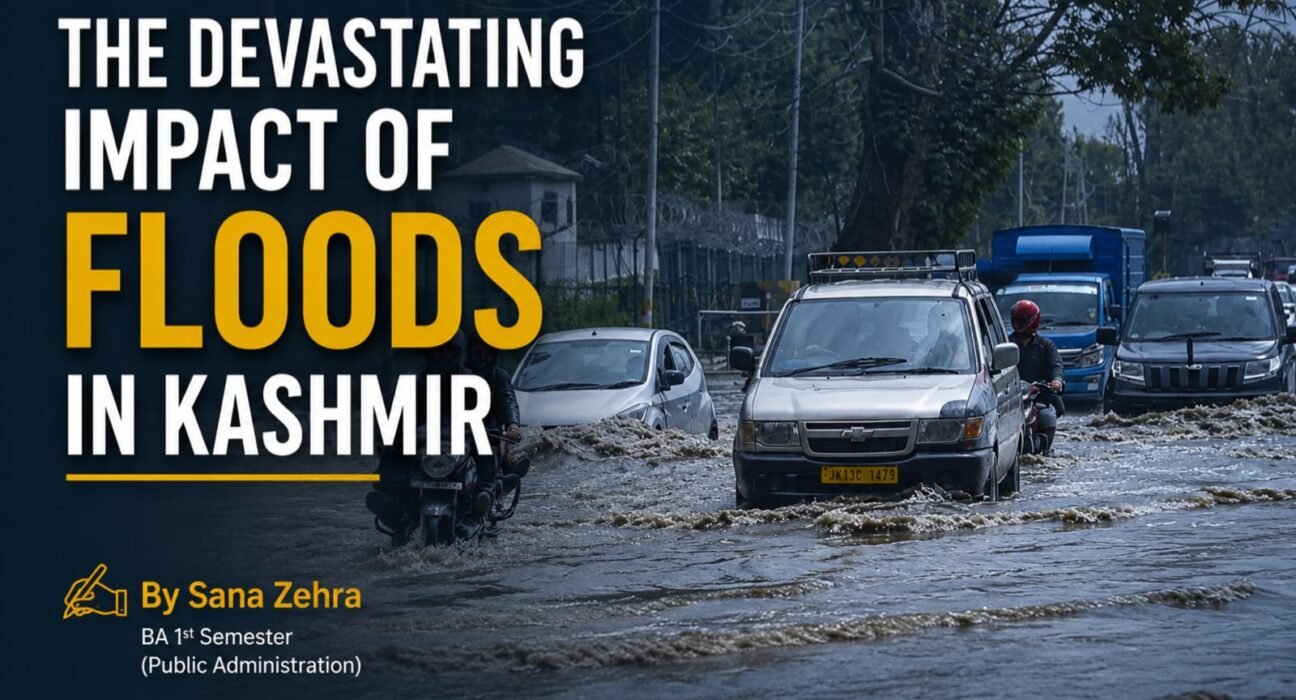
A recent example of the devastating impact of floods occurred in Beerwah Budgam district. Following torrential rainfall, the Sukhnag Nallah overflowed, causing flash floods that inundated markets, homes, and roads. The Municipal Shopping Complex in Beerwah was washed away by the powerful floodwaters, resulting in severe damage to shops and heavy financial losses for local traders. Rescue teams, including the State Disaster Response Force (SDRF), Jammu and Kashmir Police, and Civil Defence personnel, were deployed to help affected residents.
The impact of floods is devastating. Thousands of homes, schools, hospitals, roads, and bridges can be damaged or destroyed. Many families lose their homes and valuable belongings, forcing them to move to temporary shelters. Farmers suffer heavy losses as crops, orchards, and livestock are damaged, affecting their livelihoods. Floods also disrupt businesses and public services, causing economic hardship for many people.
Floods also create serious health problems. Contaminated water can spread diseases such as cholera, typhoid, and other water-borne illnesses. The lack of clean drinking water, food, and medical care makes the situation even more difficult for affected communities. Children may miss school for weeks, while many families struggle to return to their normal lives.
Apart from physical and economic damage, floods have a deep emotional impact on people. Losing homes, memories, and loved ones can cause stress, fear, and anxiety. Recovering from such a disaster often takes months or even years, requiring support from the government, relief organizations, and local communities.
Although floods cannot always be prevented, their impact can be reduced through proper planning and disaster management. Governments should strengthen embankments, improve drainage systems, develop effective flood warning systems, and prevent construction in flood-prone areas. Planting more trees and protecting forests can also help reduce flooding by improving water absorption and preventing soil erosion.
Citizens also have an important role to play. People should stay informed about weather forecasts, follow evacuation instructions during emergencies, and avoid activities that harm the environment. Community awareness and preparedness can save lives and reduce losses during natural disasters.
In conclusion, floods remain one of the greatest natural challenges in Kashmir. They affect people’s lives, damage the economy, and harm the environment. The recent Beerwah–Budgam flash floods serve as a reminder that better planning, environmental conservation, and effective disaster management are essential to reduce future risks. By working together, the government and citizens can build a safer, stronger, and more resilient Kashmir.
Support Independent and Impartial Journalism
Nouk-e-Qalam News is a free and independent journalistic platform. To maintain our ethical standards and avoid obscene advertisements, we have disabled Google Ads. We now rely on your generous financial support to continue our unbiased reporting. Our Writers and readers are kindly urged to contribute—daily, weekly, or monthly. Thank you for standing with truth.